Surrealism Tattoos: When Art Meets Skin
February 13, 2026
5 min read
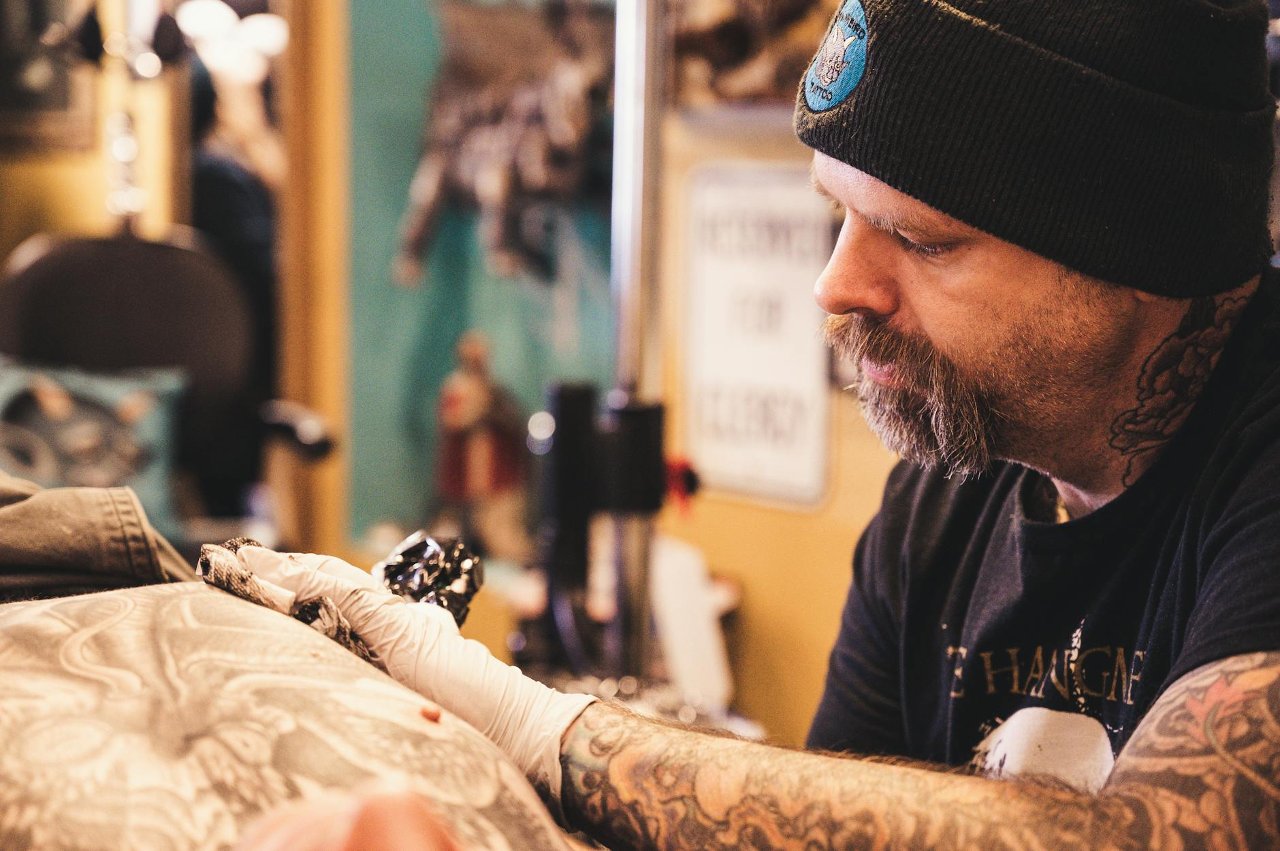
Surrealism Tattoos, When Art Meets Skin
Surrealism tattoos are the ones that make strangers lean in. Not because they’re loud, but because your brain can’t file them away quickly. A hand becomes a staircase. An eye turns into a moon. A portrait is realistic until it isn’t, and that little wrongness is the whole point.
Honestly, when surrealism is done well, it feels like wearing a private joke with your subconscious. When it’s done poorly, it just looks like “random stuff” with some smoke and a clock.
The Tricky Beauty of Surrealism Tattoos
Here’s the thing, surrealism tattoos aren’t a single look. Some lean hyper-real with one impossible twist. Others are collage-y, like torn paper and antique engravings mashed into a new dream. Some are soft and painterly, some are sharp blackwork with negative space doing the heavy lifting.
But the thread is always the same: intentional weirdness.
I remember sitting in a studio in Brooklyn watching an artist stencil a “normal” woman’s face… then add a second set of lips where the eyes should be. The client kept saying, “Make it pretty.” The artist kept saying, “Pretty is easy. Clear is hard.” That sentence lives in my head whenever someone shows me a surreal concept that’s basically five ideas fighting for one forearm.
So if you want surrealism on skin, you have to respect clarity. The design can be strange, but it cannot be confusing.
Choosing a Surrealism Tattoo Artist (This Is Not Optional)
Look, surrealism tattoos are not the place to bargain-hunt or roll the dice. You need an artist who can do at least two things well: solid technical tattooing and strong composition. Surrealism is all about believable lighting, clean edges where they matter, and controlled chaos where it adds emotion.
A few practical ways to vet someone: - Check healed photos, not just fresh ones. Surreal details can blur into mush if the artist doesn’t build contrast correctly. - Zoom in on faces, hands, and eyes. If those are consistently wonky, your “dreamlike” tattoo might just be “oops.” - Look for a consistent visual voice. Even if they do different subjects, you should feel the same taste level across their work. - Ask how they handle blacks and negative space. In surreal tattoos, that’s often what keeps the piece readable from across the room.
Platforms like Tattoomii make it easy to browse portfolios and compare artists who actually specialize in surreal and abstract realism, which saves you from trying to decode Instagram hashtags at 1 a.m.
Building a Concept That Won’t Age Like a Meme
And yes, surrealism tattoos can be trendy. Clocks, melting faces, floating geometry, the “third eye” thing. None of that is bad. It’s just easy to end up with a design that feels like a template.
In my experience, the best surreal tattoos start with one real anchor. A person you love. A place you keep dreaming about. An object with history. Then you bend reality around that.
Try this simple framework when you’re planning: - Anchor: What’s the real thing? (A portrait, a flower, a childhood house.) - Distortion: What impossible twist tells your story? (Gravity flips, body becomes landscape, objects melt, scale is wrong.) - Mood: What do you want it to feel like? (Tender, eerie, funny, existential.) - Readability: What should be recognizable from 6 feet away?
One more opinion: don’t overload it. One strong surreal “break” hits harder than ten clever details nobody can read.
Placement, Size, and Why Surrealism Needs Breathing Room
But can you do surrealism tattoos small? Sometimes. A tiny surreal piece can work if it’s graphic and simplified. The more realistic you go, the more space you need.
A few placement notes that actually matter: - Forearm and calf are great for surreal compositions because they’re readable and age well. - Upper arm and thigh give you room for background and contrast, which is where surrealism often shines. - Ribs and sternum can be gorgeous, but the pain and movement can make long sessions rough. Plan accordingly. - Hands, fingers, and inner bicep can distort fine detail over time. If the magic is in the micro-details, reconsider.
Also, talk to your artist about how the piece will flow with your body. A surreal tattoo that ignores anatomy can look like a sticker. Sometimes that’s the vibe, but usually it’s not.
Color vs Black and Grey (Pick a Lane)
Here’s a hot take: black and grey surrealism tattoos are easier to keep looking sharp for years. Contrast is king, and black ink does not negotiate.
Color surrealism can be insane in the best way, especially if you love painterly effects or neon dream palettes. Just know color needs maintenance and smart choices. Ask your artist what pigments they trust, and how they’ll keep the focal point from getting swallowed by saturation.
Either way, insist on a clear value map: lights, mids, darks. That’s what makes the “impossible” look believable.
FAQ
Do surrealism tattoos have to be realistic? No. Some of the strongest surrealism tattoos are graphic or collage-inspired. Realism is just one tool. What matters is the intentional twist and solid composition.
How do I explain a surreal tattoo idea to an artist? Bring 3-6 reference images that match the mood and texture you want, plus one clear sentence about the story. Avoid sending 30 unrelated pics. Your artist needs direction, not a scavenger hunt.
What’s the biggest mistake people make with surrealism tattoos? Cramming in too many concepts. If everything is weird, nothing is. Pick one main surreal moment and let it be the star.
Do surrealism tattoos age well? They can, if they’re built with strong contrast and enough size for the detail. Ask to see healed work from the artist you’re considering, and don’t be afraid to simplify the design for longevity.
Surrealism tattoos are the ones that make strangers lean in. Not because they’re loud, but because your brain can’t file them away quickly. A hand becomes a staircase. An eye turns into a moon. A portrait is realistic until it isn’t, and that little wrongness is the whole point.
Honestly, when surrealism is done well, it feels like wearing a private joke with your subconscious. When it’s done poorly, it just looks like “random stuff” with some smoke and a clock.
The Tricky Beauty of Surrealism Tattoos
Here’s the thing, surrealism tattoos aren’t a single look. Some lean hyper-real with one impossible twist. Others are collage-y, like torn paper and antique engravings mashed into a new dream. Some are soft and painterly, some are sharp blackwork with negative space doing the heavy lifting.
But the thread is always the same: intentional weirdness.
I remember sitting in a studio in Brooklyn watching an artist stencil a “normal” woman’s face… then add a second set of lips where the eyes should be. The client kept saying, “Make it pretty.” The artist kept saying, “Pretty is easy. Clear is hard.” That sentence lives in my head whenever someone shows me a surreal concept that’s basically five ideas fighting for one forearm.
So if you want surrealism on skin, you have to respect clarity. The design can be strange, but it cannot be confusing.
Choosing a Surrealism Tattoo Artist (This Is Not Optional)
Look, surrealism tattoos are not the place to bargain-hunt or roll the dice. You need an artist who can do at least two things well: solid technical tattooing and strong composition. Surrealism is all about believable lighting, clean edges where they matter, and controlled chaos where it adds emotion.
A few practical ways to vet someone: - Check healed photos, not just fresh ones. Surreal details can blur into mush if the artist doesn’t build contrast correctly. - Zoom in on faces, hands, and eyes. If those are consistently wonky, your “dreamlike” tattoo might just be “oops.” - Look for a consistent visual voice. Even if they do different subjects, you should feel the same taste level across their work. - Ask how they handle blacks and negative space. In surreal tattoos, that’s often what keeps the piece readable from across the room.
Platforms like Tattoomii make it easy to browse portfolios and compare artists who actually specialize in surreal and abstract realism, which saves you from trying to decode Instagram hashtags at 1 a.m.
Building a Concept That Won’t Age Like a Meme
And yes, surrealism tattoos can be trendy. Clocks, melting faces, floating geometry, the “third eye” thing. None of that is bad. It’s just easy to end up with a design that feels like a template.
In my experience, the best surreal tattoos start with one real anchor. A person you love. A place you keep dreaming about. An object with history. Then you bend reality around that.
Try this simple framework when you’re planning: - Anchor: What’s the real thing? (A portrait, a flower, a childhood house.) - Distortion: What impossible twist tells your story? (Gravity flips, body becomes landscape, objects melt, scale is wrong.) - Mood: What do you want it to feel like? (Tender, eerie, funny, existential.) - Readability: What should be recognizable from 6 feet away?
One more opinion: don’t overload it. One strong surreal “break” hits harder than ten clever details nobody can read.
Placement, Size, and Why Surrealism Needs Breathing Room
But can you do surrealism tattoos small? Sometimes. A tiny surreal piece can work if it’s graphic and simplified. The more realistic you go, the more space you need.
A few placement notes that actually matter: - Forearm and calf are great for surreal compositions because they’re readable and age well. - Upper arm and thigh give you room for background and contrast, which is where surrealism often shines. - Ribs and sternum can be gorgeous, but the pain and movement can make long sessions rough. Plan accordingly. - Hands, fingers, and inner bicep can distort fine detail over time. If the magic is in the micro-details, reconsider.
Also, talk to your artist about how the piece will flow with your body. A surreal tattoo that ignores anatomy can look like a sticker. Sometimes that’s the vibe, but usually it’s not.
Color vs Black and Grey (Pick a Lane)
Here’s a hot take: black and grey surrealism tattoos are easier to keep looking sharp for years. Contrast is king, and black ink does not negotiate.
Color surrealism can be insane in the best way, especially if you love painterly effects or neon dream palettes. Just know color needs maintenance and smart choices. Ask your artist what pigments they trust, and how they’ll keep the focal point from getting swallowed by saturation.
Either way, insist on a clear value map: lights, mids, darks. That’s what makes the “impossible” look believable.
FAQ
Do surrealism tattoos have to be realistic? No. Some of the strongest surrealism tattoos are graphic or collage-inspired. Realism is just one tool. What matters is the intentional twist and solid composition.
How do I explain a surreal tattoo idea to an artist? Bring 3-6 reference images that match the mood and texture you want, plus one clear sentence about the story. Avoid sending 30 unrelated pics. Your artist needs direction, not a scavenger hunt.
What’s the biggest mistake people make with surrealism tattoos? Cramming in too many concepts. If everything is weird, nothing is. Pick one main surreal moment and let it be the star.
Do surrealism tattoos age well? They can, if they’re built with strong contrast and enough size for the detail. Ask to see healed work from the artist you’re considering, and don’t be afraid to simplify the design for longevity.
Written By Noa