History of Tattooing: Ancient Marks to Modern Art
February 13, 2026
5 min read
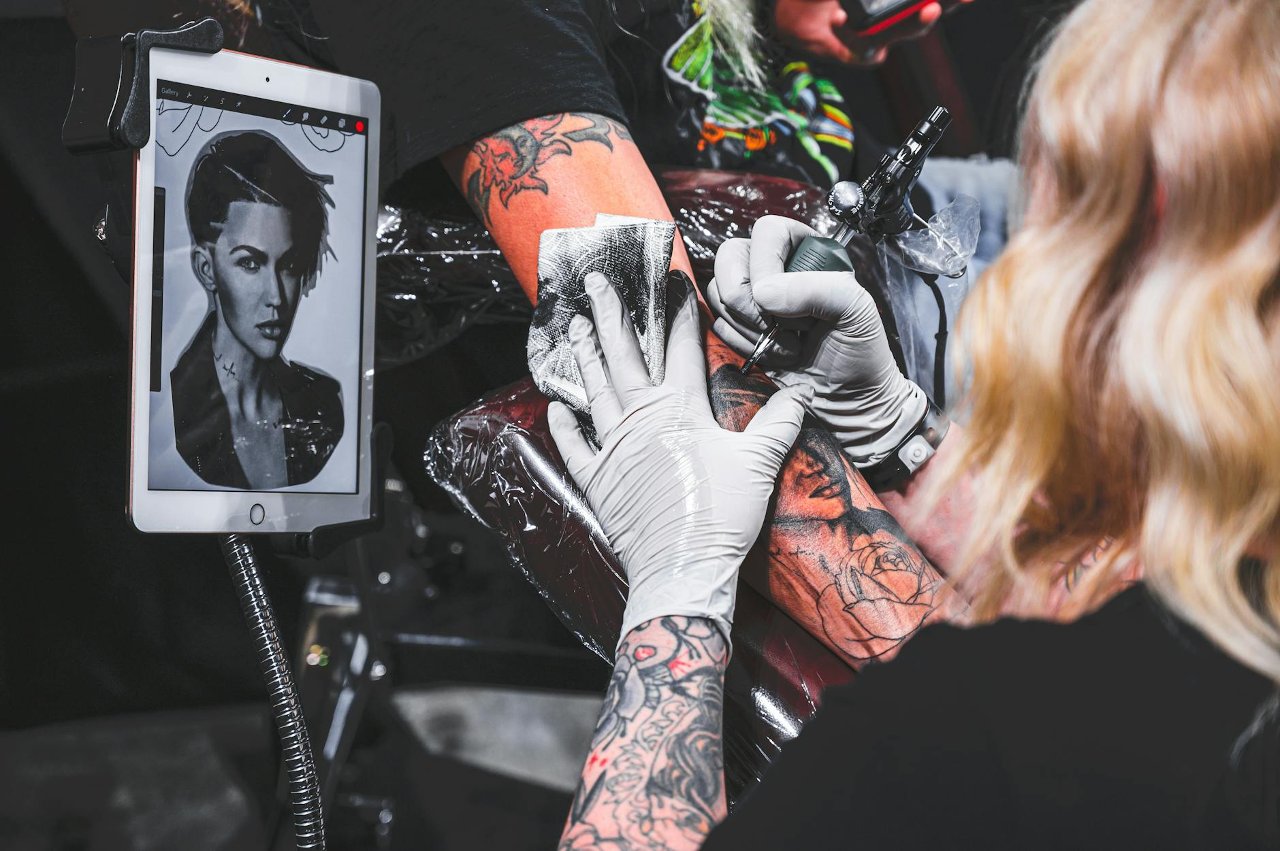
The history of tattooing isn’t some dusty timeline to me. It’s alive. You can feel it when you’re sitting in a shop chair, buzzing needle in the background, and your artist casually mentions that people have been doing this for thousands of years. Same impulse, different tools: mark the body, tell the truth, carry a story.
I remember being in a little studio years ago, watching flash sheets get swapped out while an older guy talked about the first tattoo he got in the Navy. The vibe was modern, sure, but the energy felt ancient. Like we’re all part of the same long line.
Ancient Skin, Real Evidence
Look, the history of tattooing gets way more interesting once you realize we have receipts. Not myths, not “probably,” actual bodies.
Otzi the Iceman, frozen in the Alps for over 5,000 years, had tattoo markings. Simple lines and dots, placed in spots that make a lot of people suspect they were therapeutic, kind of an early pain management move. Then you’ve got ancient Egypt, where some mummies show tattoo patterns that hint at status, spirituality, or protection. These weren’t just decorations. They were tools.
And across Polynesia, tattooing wasn’t a trend, it was identity. In places like Samoa and Maori communities, traditional tattooing carried lineage, rank, and responsibility. The designs weren’t “inspired by,” they were earned, inherited, lived.
When Tattoos Traveled (and Got Complicated)
And then tattoos started moving with sailors, traders, soldiers, and colonizers. This is the part of tattoo history that’s messy, because it’s where exchange and appropriation start tangling up.
European sailors came home with marks from the Pacific and Asia. Tattooing became a souvenir, a brag, a memory of survival. But at the same time, Western culture spent a long stretch labeling tattoos as deviant, criminal, or “exotic.” Funny how that works: take the art, judge the people.
If you’ve ever looked at old sailor flash, anchors, swallows, pin-up girls, you’re looking at a whole era of portable symbolism. Those designs were practical. They read fast, healed decently, and meant something in a world where you might not come back.
Irezumi, Ritual, and Rules
Here’s the thing: you can’t talk about the history of tattooing without talking about Japan.
Traditional Japanese tattooing (irezumi) is breathtaking. Big compositions, mythic characters, wind bars, waves, koi, peonies, dragons. It’s not “a dragon tattoo.” It’s a whole world with balance and storytelling. Historically, tattooing in Japan has had multiple lives: punishment markings in some periods, and later an incredibly refined art form tied to woodblock prints.
But it also carries stigma today because of organized crime associations. That tension is part of what makes tattoo culture real. Art doesn’t float above society, it gets dragged through it.
From Back Rooms to Galleries
Modern tattooing didn’t just appear because Instagram existed. It grew out of craft, subculture, and a lot of people getting judged for doing something they loved.
By the late 20th century, tattooing started exploding into new styles and new audiences: blackwork, realism, neo-traditional, fine line, illustrative, ornamental, you name it. The technical leap is wild too. Better machines, better inks, better hygiene standards. And artists started pushing composition like painters.
Honestly, one of my favorite shifts is how normal it is now to treat tattooing like a long-term art collection. People plan sleeves with negative space. They book multiple sessions and think about how a piece will age. That’s respect for the medium.
How to Carry the History Without Wearing a Costume
But, yeah, the modern era comes with responsibilities. Especially when you’re pulling from cultural styles.
A few practical rules I’ve learned from hanging around good artists: - If a design is tied to a living culture (Polynesian patterns, Maori moko, certain sacred symbols), don’t treat it like a Pinterest aesthetic. Learn first, and if you’re not part of that culture, consider choosing a different direction. - Ask your artist about meaning and placement. Good artists love these conversations, and they’ll tell you when something feels off. - Bring references for mood, not for copying. “I like this texture and flow” beats “I want this exact tattoo.” - Think about aging. Tiny micro-details can blur. Bold lines and clear shapes tend to hold up.
And if you’re trying to find someone who really knows their lane, platforms like Tattoomii make it easy to browse portfolios, compare healed work, and book an artist whose style actually matches what you want.
The best tattoos, in my experience, feel personal and informed. Not because you wrote a thesis first, but because you cared enough to choose well.
FAQ
What is the history of tattooing in one sentence? It’s the long human tradition of marking the body for healing, identity, protection, status, rebellion, and art, stretching back thousands of years across many cultures.
Are ancient tattoos similar to modern tattoos? Some are, surprisingly. The tools and ink chemistry have improved a lot, but the core idea, using the body as a canvas for meaning, hasn’t changed.
How can I avoid cultural appropriation with tattoos? Research the origins of what you want, listen to artists who understand the context, and avoid sacred or identity-specific designs from cultures you don’t belong to.
What should I look for when choosing an artist for a historically inspired tattoo? Look for a portfolio that shows consistent work in that style, ask to see healed photos, and choose someone who can create an original piece rather than copying a traditional design blindly.
I remember being in a little studio years ago, watching flash sheets get swapped out while an older guy talked about the first tattoo he got in the Navy. The vibe was modern, sure, but the energy felt ancient. Like we’re all part of the same long line.
Ancient Skin, Real Evidence
Look, the history of tattooing gets way more interesting once you realize we have receipts. Not myths, not “probably,” actual bodies.
Otzi the Iceman, frozen in the Alps for over 5,000 years, had tattoo markings. Simple lines and dots, placed in spots that make a lot of people suspect they were therapeutic, kind of an early pain management move. Then you’ve got ancient Egypt, where some mummies show tattoo patterns that hint at status, spirituality, or protection. These weren’t just decorations. They were tools.
And across Polynesia, tattooing wasn’t a trend, it was identity. In places like Samoa and Maori communities, traditional tattooing carried lineage, rank, and responsibility. The designs weren’t “inspired by,” they were earned, inherited, lived.
When Tattoos Traveled (and Got Complicated)
And then tattoos started moving with sailors, traders, soldiers, and colonizers. This is the part of tattoo history that’s messy, because it’s where exchange and appropriation start tangling up.
European sailors came home with marks from the Pacific and Asia. Tattooing became a souvenir, a brag, a memory of survival. But at the same time, Western culture spent a long stretch labeling tattoos as deviant, criminal, or “exotic.” Funny how that works: take the art, judge the people.
If you’ve ever looked at old sailor flash, anchors, swallows, pin-up girls, you’re looking at a whole era of portable symbolism. Those designs were practical. They read fast, healed decently, and meant something in a world where you might not come back.
Irezumi, Ritual, and Rules
Here’s the thing: you can’t talk about the history of tattooing without talking about Japan.
Traditional Japanese tattooing (irezumi) is breathtaking. Big compositions, mythic characters, wind bars, waves, koi, peonies, dragons. It’s not “a dragon tattoo.” It’s a whole world with balance and storytelling. Historically, tattooing in Japan has had multiple lives: punishment markings in some periods, and later an incredibly refined art form tied to woodblock prints.
But it also carries stigma today because of organized crime associations. That tension is part of what makes tattoo culture real. Art doesn’t float above society, it gets dragged through it.
From Back Rooms to Galleries
Modern tattooing didn’t just appear because Instagram existed. It grew out of craft, subculture, and a lot of people getting judged for doing something they loved.
By the late 20th century, tattooing started exploding into new styles and new audiences: blackwork, realism, neo-traditional, fine line, illustrative, ornamental, you name it. The technical leap is wild too. Better machines, better inks, better hygiene standards. And artists started pushing composition like painters.
Honestly, one of my favorite shifts is how normal it is now to treat tattooing like a long-term art collection. People plan sleeves with negative space. They book multiple sessions and think about how a piece will age. That’s respect for the medium.
How to Carry the History Without Wearing a Costume
But, yeah, the modern era comes with responsibilities. Especially when you’re pulling from cultural styles.
A few practical rules I’ve learned from hanging around good artists: - If a design is tied to a living culture (Polynesian patterns, Maori moko, certain sacred symbols), don’t treat it like a Pinterest aesthetic. Learn first, and if you’re not part of that culture, consider choosing a different direction. - Ask your artist about meaning and placement. Good artists love these conversations, and they’ll tell you when something feels off. - Bring references for mood, not for copying. “I like this texture and flow” beats “I want this exact tattoo.” - Think about aging. Tiny micro-details can blur. Bold lines and clear shapes tend to hold up.
And if you’re trying to find someone who really knows their lane, platforms like Tattoomii make it easy to browse portfolios, compare healed work, and book an artist whose style actually matches what you want.
The best tattoos, in my experience, feel personal and informed. Not because you wrote a thesis first, but because you cared enough to choose well.
FAQ
What is the history of tattooing in one sentence? It’s the long human tradition of marking the body for healing, identity, protection, status, rebellion, and art, stretching back thousands of years across many cultures.
Are ancient tattoos similar to modern tattoos? Some are, surprisingly. The tools and ink chemistry have improved a lot, but the core idea, using the body as a canvas for meaning, hasn’t changed.
How can I avoid cultural appropriation with tattoos? Research the origins of what you want, listen to artists who understand the context, and avoid sacred or identity-specific designs from cultures you don’t belong to.
What should I look for when choosing an artist for a historically inspired tattoo? Look for a portfolio that shows consistent work in that style, ask to see healed photos, and choose someone who can create an original piece rather than copying a traditional design blindly.
Written By Noa