Patchwork Tattoo Sleeve: The Eclectic Sleeve Trend
February 13, 2026
5 min read
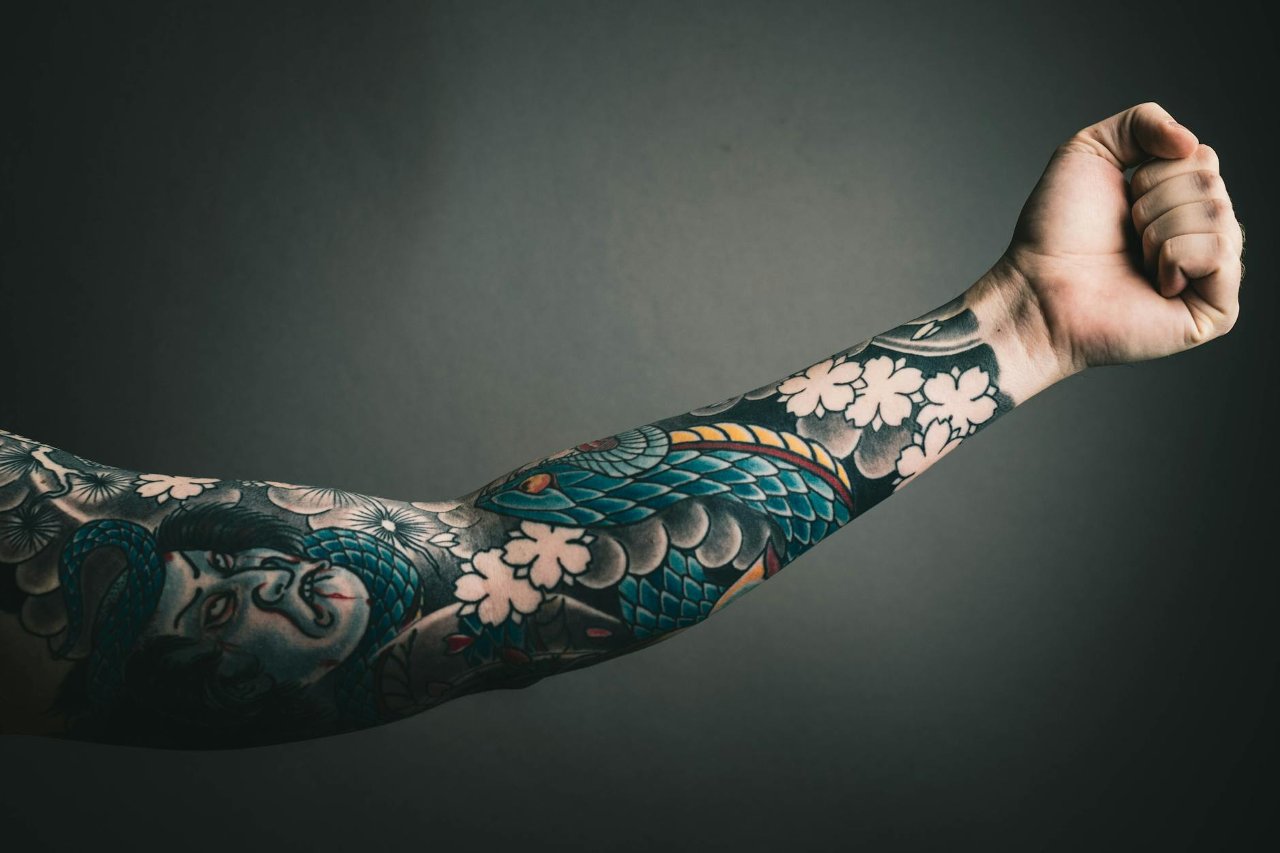
PATCHWORK TATTOO SLEEVE ENERGY
A patchwork tattoo sleeve is basically the opposite of the big, single mural sleeve. It is a bunch of smaller pieces, collected over time, living together on the arm like a stickered-up guitar case.
Honestly, I love it because it looks lived-in. Like you did not wake up one day and order a full sleeve off a menu. You built it. And when it is done well, it reads as confident, personal, and a little chaotic in the best way.
WHY THIS TREND IS TAKING OVER
Part of it is money and commitment. Not everyone wants to book a full sleeve project for the next six months, or commit to one concept forever. Patchwork lets you get one piece now, another later, and still end up with something that looks intentional.
And part of it is culture. Flash is back in a huge way, fine line is everywhere, and people are mixing styles like they mix playlists. I remember sitting in a studio in Brooklyn watching someone get a tiny dagger next to a soft little cherub, and somehow it worked. The whole arm looked like a visual diary.
But here is the thing, patchwork only looks effortless when someone actually thought about it.
HOW TO PLAN A PATCHWORK TATTOO SLEEVE (WITHOUT KILLING THE VIBE)
Look, you do not need a master blueprint. You do need a strategy.
Start with anchor pieces. Pick 2-3 tattoos that are slightly larger or bolder, and place them where the eye naturally lands, outer forearm, upper arm, maybe near the elbow. Those anchors stop the sleeve from looking like a random scatter.
Then decide your “rule” for cohesion. It can be any of these: - One consistent line weight (all fine line, or all bold) - A limited palette (all black and grey, or black with one accent color) - A shared era (traditional flash vibe, vintage engraving, spooky folklore) - A recurring motif (stars, flowers, eyes, flames, bugs)
Spacing matters more than people admit. Too tight and it turns into visual noise. Too spaced out and it reads unfinished forever. In my experience, leaving breathing room early is smart. You can always add fillers later. Removing crowding is a nightmare.
Also, think about flow around joints. Elbows, ditches, wrists, those spots can break the illusion fast. A good artist will place shapes so they wrap and move with your arm instead of fighting it.
MIXING STYLES WITHOUT MAKING IT LOOK LIKE A MESS
And yes, you can mix styles. You just need one unifying thread.
If you want traditional next to fine line, consider matching values. Like, keep both pieces mostly black, or make sure both have a similar “darkness” so one does not scream while the other whispers.
If you want realism next to illustrative, use borders or negative space to separate them cleanly. Patchwork sleeves often look best when each piece has its own little territory.
One more opinion: do not rely on tiny filler stars and dots to fix everything. They are fine, but they are not a magic spell. Sometimes the sleeve needs a medium-size filler like a spiderweb, a ribbon, a cloud, a branch, something with shape.
CHOOSING THE RIGHT ARTIST (AND WHEN TO SWITCH)
This is where people get weirdly shy. You are allowed to shop around. A patchwork tattoo sleeve can be a collaboration across time, but you still want it to feel like one story.
If you are starting from scratch, pick an artist whose portfolio already looks cohesive across different subjects. Platforms like Tattoomii make it easy to browse portfolios and spot who actually understands placement and long-term sleeve building.
Can you use multiple artists? Sure. Some of the coolest patchwork sleeves I have seen are a mix of guest spots, travel tattoos, and local favorites. Just be honest with each artist about what is already on your arm, and ask if they are comfortable designing around it.
One practical tip: take clean photos of your arm in good light before every appointment. Front, back, inner, outer. It helps the artist plan gaps and scale. It also helps you not forget what you already have when you are daydreaming at 1 a.m.
AFTERCARE AND LONG-TERM MAINTENANCE
Patchwork sleeves age like any other sleeve, which is to say, they age better when you treat them like skin, not paper.
- Moisturize consistently, especially in winter - Sunscreen is non-negotiable if you want crisp lines - If you are doing lots of small tattoos, give your skin real breaks between sessions
And if you are collecting fine line pieces, be extra picky about artist quality. Fine line that is done well is gorgeous. Fine line that is rushed turns into a gray suggestion of what you meant.
FAQ
How long does a patchwork tattoo sleeve take? Most people build it over months or years. That is kind of the point. You can start with 2-4 pieces and slowly connect the rest as your taste evolves.
Do patchwork tattoo sleeves need filler? Not always. Some sleeves look amazing with intentional negative space. If it feels incomplete, choose fillers with real shapes, not just dots everywhere.
Can I start a patchwork sleeve with one small tattoo? Yes, just place it thoughtfully. Start where you will not regret the prime real estate later, like outer forearm or upper arm, and leave room around it.
How do I keep a patchwork tattoo sleeve cohesive? Pick one rule: consistent line weight, a limited palette, or a recurring motif. Then stick to it enough that your arm reads like a collection, not a collision.
A patchwork tattoo sleeve is basically the opposite of the big, single mural sleeve. It is a bunch of smaller pieces, collected over time, living together on the arm like a stickered-up guitar case.
Honestly, I love it because it looks lived-in. Like you did not wake up one day and order a full sleeve off a menu. You built it. And when it is done well, it reads as confident, personal, and a little chaotic in the best way.
WHY THIS TREND IS TAKING OVER
Part of it is money and commitment. Not everyone wants to book a full sleeve project for the next six months, or commit to one concept forever. Patchwork lets you get one piece now, another later, and still end up with something that looks intentional.
And part of it is culture. Flash is back in a huge way, fine line is everywhere, and people are mixing styles like they mix playlists. I remember sitting in a studio in Brooklyn watching someone get a tiny dagger next to a soft little cherub, and somehow it worked. The whole arm looked like a visual diary.
But here is the thing, patchwork only looks effortless when someone actually thought about it.
HOW TO PLAN A PATCHWORK TATTOO SLEEVE (WITHOUT KILLING THE VIBE)
Look, you do not need a master blueprint. You do need a strategy.
Start with anchor pieces. Pick 2-3 tattoos that are slightly larger or bolder, and place them where the eye naturally lands, outer forearm, upper arm, maybe near the elbow. Those anchors stop the sleeve from looking like a random scatter.
Then decide your “rule” for cohesion. It can be any of these: - One consistent line weight (all fine line, or all bold) - A limited palette (all black and grey, or black with one accent color) - A shared era (traditional flash vibe, vintage engraving, spooky folklore) - A recurring motif (stars, flowers, eyes, flames, bugs)
Spacing matters more than people admit. Too tight and it turns into visual noise. Too spaced out and it reads unfinished forever. In my experience, leaving breathing room early is smart. You can always add fillers later. Removing crowding is a nightmare.
Also, think about flow around joints. Elbows, ditches, wrists, those spots can break the illusion fast. A good artist will place shapes so they wrap and move with your arm instead of fighting it.
MIXING STYLES WITHOUT MAKING IT LOOK LIKE A MESS
And yes, you can mix styles. You just need one unifying thread.
If you want traditional next to fine line, consider matching values. Like, keep both pieces mostly black, or make sure both have a similar “darkness” so one does not scream while the other whispers.
If you want realism next to illustrative, use borders or negative space to separate them cleanly. Patchwork sleeves often look best when each piece has its own little territory.
One more opinion: do not rely on tiny filler stars and dots to fix everything. They are fine, but they are not a magic spell. Sometimes the sleeve needs a medium-size filler like a spiderweb, a ribbon, a cloud, a branch, something with shape.
CHOOSING THE RIGHT ARTIST (AND WHEN TO SWITCH)
This is where people get weirdly shy. You are allowed to shop around. A patchwork tattoo sleeve can be a collaboration across time, but you still want it to feel like one story.
If you are starting from scratch, pick an artist whose portfolio already looks cohesive across different subjects. Platforms like Tattoomii make it easy to browse portfolios and spot who actually understands placement and long-term sleeve building.
Can you use multiple artists? Sure. Some of the coolest patchwork sleeves I have seen are a mix of guest spots, travel tattoos, and local favorites. Just be honest with each artist about what is already on your arm, and ask if they are comfortable designing around it.
One practical tip: take clean photos of your arm in good light before every appointment. Front, back, inner, outer. It helps the artist plan gaps and scale. It also helps you not forget what you already have when you are daydreaming at 1 a.m.
AFTERCARE AND LONG-TERM MAINTENANCE
Patchwork sleeves age like any other sleeve, which is to say, they age better when you treat them like skin, not paper.
- Moisturize consistently, especially in winter - Sunscreen is non-negotiable if you want crisp lines - If you are doing lots of small tattoos, give your skin real breaks between sessions
And if you are collecting fine line pieces, be extra picky about artist quality. Fine line that is done well is gorgeous. Fine line that is rushed turns into a gray suggestion of what you meant.
FAQ
How long does a patchwork tattoo sleeve take? Most people build it over months or years. That is kind of the point. You can start with 2-4 pieces and slowly connect the rest as your taste evolves.
Do patchwork tattoo sleeves need filler? Not always. Some sleeves look amazing with intentional negative space. If it feels incomplete, choose fillers with real shapes, not just dots everywhere.
Can I start a patchwork sleeve with one small tattoo? Yes, just place it thoughtfully. Start where you will not regret the prime real estate later, like outer forearm or upper arm, and leave room around it.
How do I keep a patchwork tattoo sleeve cohesive? Pick one rule: consistent line weight, a limited palette, or a recurring motif. Then stick to it enough that your arm reads like a collection, not a collision.
Written By Noa